

Cobalt removal from waste effluents
Cobalt removal from water is a crucial process in water treatment due to the potential toxic effects of Cobalt ions at high concentrations. Cobalt -containing wastewater can contaminate water sources from industrial activities, mining, and certain chemical processes.
Some of the hazards associated with Cobalt in water include:
- Toxicity: High concentrations of Cobalt can be harmful to fish, aquatic plants, and microorganisms, disrupting ecosystems.
- Bioaccumulation: Cobalt can accumulate in the tissues of aquatic organisms, leading to long-term effects on the food chain and potentially reaching humans.
- Human Health Risks: Prolonged exposure to Cobalt -contaminated water may cause respiratory and cardiovascular issues and may affect the thyroid and kidneys.
- Reproductive and Developmental Effects: Exposure to Cobalt has been linked to reproductive and developmental toxicity in aquatic species, and potentially in humans as well.
- Carcinogenic Potential: Some forms of Cobalt have been classified as possibly carcinogenic to humans, especially with prolonged exposure to elevated concentrations.
- Interference with Drinking Water Quality: Cobalt in drinking water may pose risks to human health, particularly in areas where there is long-term exposure at low levels.
Cobalt can be present in water in several forms, mainly depending on the chemical conditions such as pH, redox potential, and the presence of other ions or compounds.
- Cobalt (II) (Co²⁺): The most common and stable form of Cobalt in water under neutral to slightly alkaline conditions. It is a divalent cation (Co²⁺), and it can form complexes with other ligands (e.g., chloride, sulfate, or organic compounds) in water.
- Cobalt (III) (Co³⁺): Cobalt (III) is less stable in water than Co²⁺. It can be formed in highly oxidizing environments, but it is not as common as Cobalt (II) in natural water bodies. It often forms complexes, especially with ligands such as amines or cyanide in specific conditions.
- Cobalt Complexes: Cobalt -Chloride Complexes: Cobalt ions can form soluble complexes with chloride ions, particularly in water with a high concentration of chloride (e.g., seawater).
- Cobalt -Sulfate Complexes: In sulfate-rich waters, Cobalt may be present as Cobalt sulfate complexes.
- Cobalt -Organic Complexes: In the presence of organic ligands (like humic substances or EDTA), Cobalt can be complex, affecting its solubility and mobility.
The choice of Cobalt removal method depends on the specific characteristics of the contaminated water, such as:
- pH of the water: Cobalt ions are more likely to precipitate as hydroxides under basic conditions. The pH may need to be adjusted depending on the method used.
- Concentration of Cobalt: Higher concentrations of Cobalt might require more intense treatment methods.
- Presence of other ions: Other ions in the water (like calcium, magnesium, or iron) may interfere with the removal process, requiring additional steps or consideration in selecting the method.
- Contact time: In adsorption and ion exchange, the time allowed for interaction between the contaminants and the medium is critical for effectiveness.
Below are some common methods used to remove Cobalt from water:
- Chemical Precipitation
Chemical precipitation is one of the most common methods for removing Cobalt from wastewater. In this process, chemical agents are added to the water to form insoluble compounds with Cobalt ions, which can then be removed by sedimentation or filtration.
- Reagents used: Hydroxides (such as lime or sodium hydroxide) are commonly used to precipitate Cobalt as Cobalt hydroxide (Co(OH)₂).
- The precipitate can then be filtered out with multimedia filters or (ceramic) ultrafiltration or allowed to settle.
- Ion Exchange
Ion exchange is a process where Cobalt ions in the water are exchanged with other ions (like sodium or hydrogen) from a solid resin or other medium.
- Resins used: Selective ion-exchange resins, such as chelating resins or metal-specific resins, can capture Cobalt ions.
- Adsorption
Adsorption involves the attachment of Cobalt ions to a solid surface, removing them from the water. Several materials can be used for this purpose:
- Activated carbon: Adsorbs a wide range of contaminants, though its effectiveness for Cobalt might be limited compared to more specialized materials.
- Electrocoagulation
Electrocoagulation is a process where an electric current is passed through water, causing metal ions like Cobalt to precipitate out of the solution. The electrodes, typically made of iron or aluminum, produce coagulants that can bind with Cobalt and cause it to form a solid phase that is then removed.
- Membrane Filtration
Membrane technologies like reverse osmosis (RO) or nanofiltration (NF) are effective for removing heavy metals, including Cobalt, from water.
- Reverse osmosis: This method uses a semi-permeable membrane to remove dissolved metals. It is effective for very low concentrations of Cobalt but may require pre-treatment of the water to prevent membrane fouling.
- Nanofiltration: This is a type of membrane filtration that is slightly less selective than reverse osmosis but still effective in removing divalent ions like Cobalt.
- Electrochemical Methods
Electrochemical reduction can be employed to reduce Cobalt ions to metallic Cobalt, which can then be removed from the water as a solid.
- Electroplating: Cobalt can be electroplated onto a cathode, effectively removing it from the solution.
- Electrochemical reduction: A more direct method of reducing Co²⁺ to Co⁰ can also be used, followed by filtration to remove the solid Cobalt.
- Bioremediation
This approach utilizes microorganisms to remove Cobalt from water. Certain bacteria, fungi, and algae can absorb or transform Cobalt into less toxic forms. Bioremediation methods have the advantage of being environmentally friendly, though they can be slower and less efficient compared to other methods.
- Crystallization
Crystallization involves the formation of solid Cobalt-containing compounds, which can then be removed from the water. Cobalt salts like Cobalt sulfate can be crystallized and separated, although this method requires precise control over conditions such as temperature and pH.
Lenntech's Tailored Solutions for Cobalt removal
For this application, Lenntech has designed and built a complete Ion Exchange system for Cobalt removal to meet the stringent requirements of the client.
Reference:
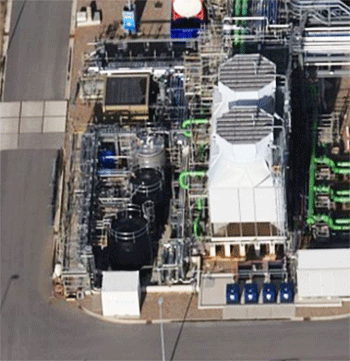
Ion Exchange for Cobalt removal, Delfzijl, The Netherlands