

electrolysers to electrify the industry
Total feed water requirement for Hydrogen production with electrolysers to electrify the industry in the Netherlands in 2050
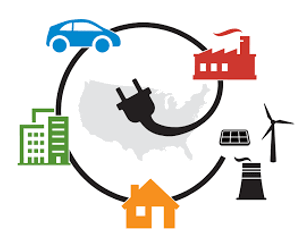
According to the Electrification Roadmap for the Dutch industry, the total demand for electrical energy is projected to grow significantly by 2050 as the sector undergoes electrification. The additional electricity required for industrial use could reach up to 130 TWh by 2050, meeting 60% of the industry's total energy needs. This represents a substantial increase, roughly three to four times the current electricity consumption of the Dutch industry. Achieving the energy transition and sustainability goals will necessitate sourcing this electricity from renewable options, such as green hydrogen.
To fully meet this demand with green hydrogen, up to 6.5 million tons per year will need to be produced, requiring 75 GW of electrolysis capacity. This, in turn, would need to be powered by an equivalent renewable energy capacity, such as offshore wind. For instance, the Netherlands aims for 70 GW of offshore wind capacity by 2050, aligning closely with the energy needs for green hydrogen production.
In addition to electricity, green hydrogen production demands significant volumes of water as feedstock. To meet the target, approximately 60 million m3/year of ultrapure water would be needed, equivalent to 80 million m3/year of drinking water. Comparatively, the current annual water consumption in the Netherlands is about 1,200 million m3, with consumers using 800 million m3 and industries 400 million m3, primarily as drinking water.
Rainwater concept: purified rainwater as electrolyzer feedwater to support green hydrogen production
Green hydrogen production demands significant volumes of water as feedstock. To meet the target, approximately 60 million m3/year of ultrapure water would be needed, equivalent to 80 million m3/year of drinking water.
To minimize the impact of hydrogen production on the existing water supply, alternative sources like surface water, groundwater, or seawater can be considered. An innovative solution is the Hemelwater concept, which involves using purified rainwater as feedwater for electrolyzers. Already widely employed in greenhouse operations, this approach offers multiple advantages for green hydrogen production. Rainwater use would reduce the demand for drinking water, preserving it for essential applications. Additionally, rainwater is naturally soft and has lower dissolved solids compared to tap water, making it easier and more cost-effective to purify.
A plant with a 1 GW electrolyzer capacity would require about 1.1 million m3/year of feedwater. With the Netherlands receiving an average annual rainfall of 75 cm, a rainwater collection area of 1.5 km2 would suffice for such a plant. To meet the feedwater needs of the entire green hydrogen production target, a total collection area of approximately 106 km2 would be required —equivalent to about half the size of Amsterdam.