

RO Membrane Preformance Decline & Advanced Diagnostics
In most cases, reverse osmosis (RO) performance issues can be resolved through operational adjustments, improved pretreatment, or Cleaning-in-Place (CIP). However, some systems experience persistent or unexplained performance decline even after standard corrective actions.
When permeate flow, pressure drop, or salt rejection do not recover as expected, deeper technical diagnostics may be required to identify the underlying cause and prevent repeated operational issues.
When advanced diagnostics become necessary
Advanced diagnostics are recommended when:
- Performance does not recover after properly executed CIP
- Fouling or scaling returns rapidly after cleaning
- Pressure drop increases without clear feedwater quality changes
- Salt rejection declines unexpectedly
- Membrane life appears shorter than expected
In such situations, relying solely on operational adjustments may not reveal the true cause of the problem.
Typical causes of persistent performance loss
Long-term performance decline may result from several mechanisms, including:
- Irreversible fouling or scaling that cannot be removed by standard cleaning
- Membrane oxidation or chemical damage caused by improper chemical control
- Mechanical damage such as element deformation, seal failure, or telescoping
- Undetected pretreatment problems leading to repeated fouling cycles
- Operating conditions outside design limits (flux, recovery, or pressure)
Correctly identifying the dominant mechanism is essential before modifying system operation or replacing membranes.
Membrane autopsy: identifying the root cause
When operational data, normalization trends, and cleaning history do not clearly explain performance loss, a membrane autopsy can provide valuable insight into the underlying cause. All process information must be shared to ensure a good understanding of the situation to support the autopsy.
During a membrane autopsy, selected elements — typically from the lead and tail positions of the pressure vessel — are removed from the system and sent to specialized laboratories for detailed analysis. Comparing elements from different positions helps determine whether fouling is primarily caused by feedwater contaminants, concentration effects, or operational conditions within the system.
The autopsy process generally includes several investigation steps:
- Visual inspection of membrane surfaces, spacers, and feed channels to detect fouling layers, scaling deposits, or mechanical damage
- Deposit identification to determine the presence of inorganic scale, organic fouling, biofilm, or particulate contamination
- Chemical and microscopic analysis to characterize the composition and structure of the fouling materials
- Membrane integrity evaluation to detect oxidation, chemical degradation, or aging of the membrane layer
Below a few illustrated examples of tests performed during a membrane autopsy.
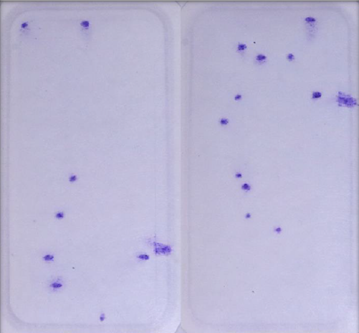
Dye test of a permeate side of a membrane – dye passage exposure
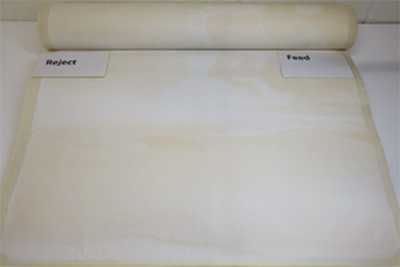
Membrane visual inspection – Exposed membrane surface
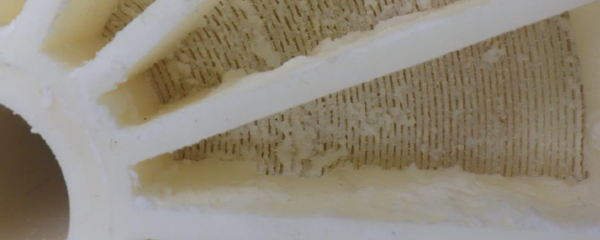
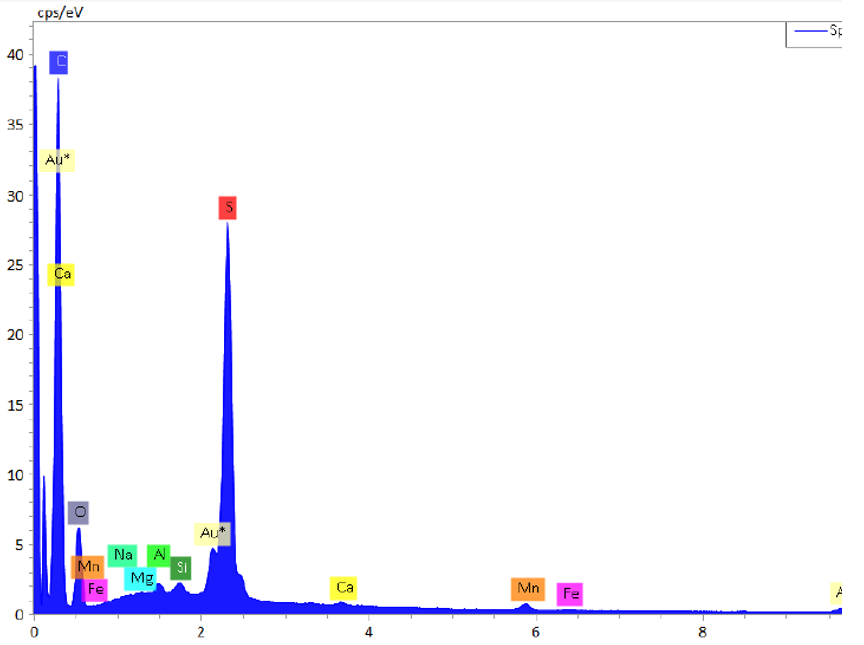
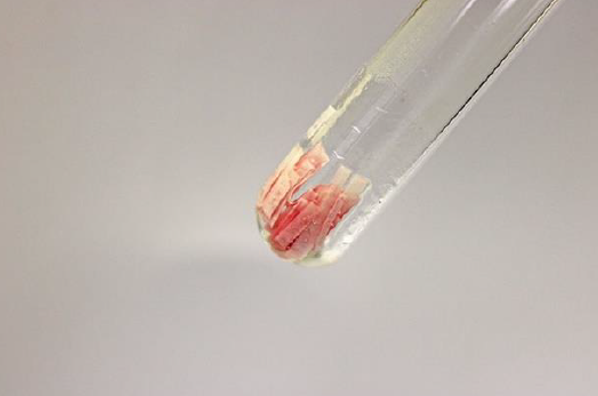
Fujiwara test - possible oxidation exposure
The results of these analyses help determine whether the main cause of performance decline is related to pretreatment limitations, scaling potential, biofouling development, chemical exposure, or mechanical stress within the system.
Membrane autopsy findings are particularly valuable when performance loss persists after cleaning, when membranes fail earlier than expected, or when repeated fouling cycles occur. By identifying the true mechanism responsible for the decline, operators can implement targeted corrective actions such as pretreatment improvements, chemical program adjustments, operational changes, or system design modifications.
In many cases, this structured diagnostic approach helps prevent recurring problems and supports more reliable long-term RO operation.
Advanced diagnostic methods
Laboratory diagnostics may include several analytical techniques depending on the suspected problem:
- Chemical analysis to identify inorganic scale components
- Organic analysis to characterize fouling materials
- Microscopic examination to evaluate biofilm or particulate deposits
- Membrane surface evaluation to detect physical damage or aging
Combined with operational data and cleaning records, these analyses allow a precise understanding of the failure mechanism.
The objective of advanced diagnostics also to guide corrective actions that prevent recurrence. Based on diagnostic results, improvements may include:
- Optimization of pretreatment processes
- Adjustment of chemical dosing programs
- Modification of operating conditions such as recovery or flux
- Improvement of cleaning strategies
- Redesign of specific treatment steps if required
This structured approach helps avoid repeated fouling cycles and unnecessary membrane replacement.
Feedwater risk management
Many persistent membrane problems originate from variations or upsets in feedwater quality. Effective feedwater risk management involves identifying potential contaminants and ensuring that pretreatment processes consistently protect the membranes.
Parameters commonly monitored include turbidity, suspended solids, organic matter, iron, manganese, hardness, silica, and biological activity. Sudden changes in these parameters may increase the risk of fouling, scaling, or biofouling if not detected early.
Maintaining stable pretreatment operation, monitoring key feedwater indicators, and reviewing upstream process changes help reduce the likelihood of unexpected membrane performance decline and extend membrane lifetime.
Benefits of advanced diagnostics
Implementing advanced diagnostics provides several operational advantages:
- Clear identification of fouling or damage mechanisms
- Reduced risk of recurring performance problems
- More effective cleaning and maintenance strategies
- Optimized membrane replacement planning
- Improved long-term reliability of the RO system
Understanding the true cause of performance decline enables operators to take targeted corrective actions instead of relying on trial-and-error adjustments.
How Lenntech can support
Lenntech assists industrial operators by reviewing operational data, identifying potential causes of performance decline, and recommending appropriate diagnostic approaches.
When required, Lenntech can coordinate membrane inspection and laboratory autopsy services, interpret the results, and support the implementation of corrective actions to restore stable system performance.
For more information or quotation, please contact us:  Feedback Form or call us on +31 152 610 900
6/12